Monday, May 20, 2013

The Five Saddest Episodes Of Supposedly Funny TV Shows


Warning: Spoilers to the following shows - How I Met Your Mother, Futurama, Scrubs, Psych, Rugrats


What makes good television? A clever antagonist? A lovable protagonist? Crazy aliens? Outbursts of perfectly choreographed dancing and singing? It’s all of these things and more - The ability to create a good drama. People watch TV to see the events unfold, everything from The Simpsons to The Sopranos has a grasp of basic storytelling. Each episode has a sense of seriousness mixed in with the jokes. Whether the storyline is dooping the people of Springfield into buying a monorail or saving Sookie’s life for the hundreth time, every show has drama put into it. Sometimes, however, the comedies can get a little too dark and all of a sudden a show that we watched to make us happy makes us feel depressed. If you don’t believe me, then try watching...


1. How I Met Your Mother - Marshal’s Father Dies

How I Met Your Mother, though a comedic love story told in an unconventional way, has you emotionally invested from the start. Ted is dying to meet the love of his life and constantly gets down and depressed when it doesn’t work out. You even feel a connection with Barney in the later seasons as he slowly starts to fall for Robin. Though through all of the heartbreak - Lily walking out on Marshal, Ted being left at the alter, Robin rejecting Ted again and again and again, there is one moment that made me deeply depressed for several days - The episode where Marshal’s Father Dies.

In the 13th episode of the sixth season, “Bad News”, Lily and Marshal are worried about having a baby. They’ve been trying but so far have had no luck. Lily goes to a fertility doctor who, incidentally, looks exactly like Barney, and finds out that she is very fertile. Marshal is about call his father with the good news when he realize it may be he who is impotent.

He ignores his father’s calls as he struggles with this decision, only to find that his parents come to New York City to surprise him. He struggles with telling them, but eventually they discover the potential problem and they assure him that they love him regardless. If it ends up that he is infertile he can adopt or find a sperm donor, and they think there’s nothing wrong with that.

His parents return home and Marshal produces the sample needed for the fertility test. Expecting bad news all day, Marshal is told by the doctor that he’s fine and he and Lily can have a baby. Excited, while standing outside of MacLaren’s he tries to call his dad, who doesn’t answer. Lily pulls up in a cab and walks out, looking devastated. She tells him his father is dead, and he loses it. The episode ends with him crying, saying “I’m not ready for this.”

Marshal learns that his father died

The show's creators, Carter Bays and Craig Thomas, wanted to explore how the characters would deal with such a loss. This show is about adulthood and the milestones you come across, unfortunately, losses like these are one of these milestones.

What makes this scene so amazing is Jason Segel improvised his entire reaction. The script said that Lily was going to tell him that she was pregnant. When they went to film the scene, the creators filled them in that that wouldn’t be the line. Allyson Hannigan was told what to say, and Jason Segel wasn’t told the line, but that his que to react would be when she said the word “it”. The scene was done in only one take.

Throughout this episode a countdown can be seen on various objects - Calendars, beer bottles, etc. The countdown is from 50 to 1 in order and was put there to give the audience an early sign that something big was going to happen. The 1 is seen on the top of the taxi that Lily shows up in.

This scene is difficult because the loss of your parents is something almost everybody is going to have to go through at some point. It’s not easy, and it’s not something you’re ever ready for. Jason Segel’s improvised line, “I’m not ready for this,” is a clear and true example of how most people would feel in that situation. Making for a great episode and a weeping, depressed fan base.


2. Futurama - Fry’s Dog Is Left In The Past

Fry loves his dog, Seymour. 


Brought to you from the same mind that created The Simpsons, Futurama has been one of the most underrated cartoons of the last decade. Originally airing in 1999 and resurrecting from being cancelled, the show handles heavily in comedy but is also very smartly written. Taking place in the millenia 3000, the show often references both real life and fictional scientific advancements. Though it labels itself as a comedy, it is no stranger to creating episodes that bring tears to the manliest of audiences.


In “Jurassic Bark”, the seventh episode of the fourth season, Fry is taken to a museum where he discovers the fossilized remains of his dog, Seymour. He protests by dancing “The Hustle” in front of the museum (Because nothing says “Give me my dead dog back” like a 90’s dance routine) and they eventually release the dog into his care.

Professor Farnsworth believes he can clone the dog, even replicating his memories and personality. Fry is excited to get his best friend back, much to the dismay of a jealous Bender. The episode ends with Professor Farnsworth discovering Seymour died at the age of 15, a full 12 years after Fry was frozen. Fry realizes that his dog lived a long, happy life after he disappeared and that Seymour forgot about him a long time ago, so he decides not to clone him.

The episode, however, then finishes with Fry’s dog waiting outside of Panucci’s Pizza, obeying Fry’s last command to wait him for him there. The years pass, and Seymour and Mr. Panucci both show their age. The final shot is Seymour laying down and closing his eyes.

This episode is heartbreaking because Fry’s dog never left, for 12 years he waited faithfully and never got to see his owner again. The only thing that makes this episode okay in my mind is the Futurama movie “Bender’s Big Score”, in which a time traveling code is found to be tattooed on Fry’s ass. Through a series of time traveling adventures and multiple versions of Fry from different timelines, one returns to the year 1999 on New Year’s Eve and returns to his original life. He raises and loves his dog until the year 2012 where he survives an assassination attempt by a virus-infected Bender. Fry survives the attack but his hair is burned off and his larynx is damaged, deepening his voice. Upon looking in the mirror he realizes that he is the character Lars from earlier in the movie, and he rushes to the cryochamber to re-freeze himself so he can be with Leela.

So if you pay attention to the timelines, in the end Seymour did get those years back with Fry and he wasn’t left in front of Panucci’s Pizza for over a decade. I choose to accept this chain of events because it makes this episode a little less heartbreaking.


3. Scrubs - Dr. Cox Makes A Decision That Kills Three People

Despite being a sitcom, the fact that Scrubs takes place in a hospital means that it’s going to approach some difficult situations from time to time. We’ve seen some sad episodes, like when Dr. Cox’s best friend Ben dies of cancer, or when the intern Cabbage is responsible for the death of one of JD’s favorite patients. But the saddest episode is the 20th episode of season 5, “My Lunch”.

JD and Dr. Cox need organ transplants for three patients - Mrs. Sykes needs a new liver, Mr. Denison needs a heart valve, and Dr. Cox’s patient, Dave, needs a new kidney. They contact other hospitals but no organs are available. A common problem, but the young doctors remain optimistic that they’ll work through it. To combat the stress of the hospital, Dr. Cox leaves for the supermarket for lunch and JD follows him. There, they encounter a former patient who tried to kill herself, Jill Tracy.

Through a series of unwanted conversations with her,  JD learns without comprehending the sad state of her life. It’s not until she shows up at the hospital from a supposed cocaine overdose that he realizes she was trying to reach out for help. She is going to die, so Dr. Cox takes her organs to save the other three patients.

After the transplant, however, it’s revealed that Jill Tracy did not die of an overdose,, she died of rabies. So all of the transplant patients are infected and one by one they die. JD tries to tell Dr. Cox that these patients had hours to live anyways, that waiting would have been irresponsible. Dr. Cox starts to agree but then his pager goes off notifying him that his patient, Dave, has gone into cardiac arrest. Frantically he applies a de-fib but he’s unable to get the patient back. This leads to a heartbreaking scene of him throwing the paddles onto the crash cart and knocking it over, screaming at the top of his lungs. He knows Dave could have waited another month for a kidney, and blames himself for their deaths. This spurs a deep depression that takes another episode of storytelling to get out of.

Dr. Cox deals with making a decision that killed three patients


This episode deals with a good issue that a lot of doctors and nurses have to face. During long treatments, they can get to know their patients. If they let themselves get too involved it can be difficult when things go bad. Dr. Cox tells JD that if you start blaming yourself for people’s deaths you’ll never come back from it. It looks like JD is going to be the one to fall to this unfortunate truth, but in the end it’s Dr. Cox that can’t bring himself back from it.


4. Psych - Sean’s Father Is Shot And Left To Die

Psych is a detective comedy that lacked in drama for the first few seasons because the writers didn’t seem to like putting their characters in any life threatening situations. This was modified in the later seasons, however, as tears are shed, blood is spilt and Sean starts to lose his smooth and sarcastic demeanor at time. The drama in the show reached a horrifying climax at the end of season 6 when Sean’s father is shot on the beach.

The episode opens with a twenty year old case being re-opened upon the discovery of the body of a girl who was reported missing twenty years earlier. Sean’s Dad was on the case and he never solved it. The Chief allows him to be the detective on the case to help close it.

The case eventually uncovers a police cover up of the murder, involving two cops that Henry worked close with - Jack and Lou. They were taking bribes and were told if they didn’t help hide the body and cover it up they would be exposed.

After they’re caught, Henry goes to talk with another old cop friend of his about the case. Sean realizes that the friend he’s going to meet is Jerry, who was also apart of the police cover up. He slips up while talking to Henry and Henry realizes that he was apart of it. Instead of going to jail, Jerry pulls a gun and shoots Henry at point blank range. That’s where season 6 ends and the fans were left to panic for the next several months until season 7 aired.

Henry's old friend pulls a gun and shoots him

Psych doesn’t often make you feel like a character’s life is truly in danger, but in this episode fans around the world were terrified that Henry Spencer could be off the show for good. Fortunately, in the season premiere of season 7 the doctors save his life and Sean helps finally catch Jerry. The episode ends with Henry recovering and the case of the twenty year old murder solved.


5. Rugrats  - Chucky’s Mom Is Dead

Like many shows of the 90’s, Rugrats dealt with darker issues from time to time. Some were made light of and were put in for the amusement of the parents, like referencing that Grandpa Lou is the reason the attack on Pearl Harbor was so catastrophic. But from time to time they’ll dive into the deeper issues to give the child audience of the day some exposure to some of the more harsh realities of life. One of these is what happened to Chucky’s Mom.

Chucky has always been the off one of the group - He’s terrified of everything, he appears to have early-onset asthma, and even though he’s 2 years old he doesn’t show much more cognitive skill than his 1 year old friends. Though learning his backstory this is more than understandable.

Throughout the series it’s referenced and understood that Chucky doesn’t have a Mom. It’s implied that she died but Chucky himself never questions it until the 16th episode of season 4, “Mother’s Day.” In this full 22 minute Mother’s Day special, the kids explore the house looking for gifts to give their mothers. When Chaz arrives with Chucky, he pulls Didi aside and hands her a box filled with his late wife’s belongings, saying he doesn’t want Chucky to get into it.

So, seemingly for the first time, Chucky starts to question why he doesn’t have a Mom. When asked he says, “I don’t know, I’ve just never had one.” They then try to find him a Mother, going to the lengths of substituting Lil, Angelica, and even their dog Spike so Chucky knows what it’s like to have a Mother. He describes he had a dream once, where there were flowers everywhere and a woman was holding him while a butterfly flew by and “he wasn’t even afraid of it.” That’s the only memory Chucky has of his Mom.

Chucky's only memory of his mother

At the end of the episode Chucky does get into the box that Chaz tried to hide and Chucky finds the picture of his mother. Chaz tries to put it away again but Didi tells him she thinks it’s time he talked to Chucky about his Mother. Chaz, clearly upset, says he just doesn’t want him to miss her. Didi responds, “Then you two can miss her together.”

Chucky finds the picture of his mother and gives it to his Dad for Mother's Day

So he takes Chucky into their backyard and shows him her things, including a diary she kept when she was in the hospital. The last thing she wrote was a poem about Chucky, indicating that she knew her illness was terminal and she would be leaving him behind very soon. Though it’s never mentioned exactly what she was dying of, we can infer that she was hospitalized a few months after Chucky’s birth and that, given the amount written in the diary, her hospitalization lasted at least several months. Many fans believe it was cancer she passed away from, but the show never verified this.

Sunday, May 12, 2013

Five Things Kids Today Won't Ever Experience In Video Games


I don’t think there’s an industry that has evolved more rapidly than video games. In the past 20 years we’ve seen movies go from VHS to DVD to Blu-Ray and 3D, we’ve seen books go online and onto E-Readers, and we’ve seen radio become more syndicated and music based. But as these things existed long before the 90’s, that left video games with a lot of catching up to do. We’ve moved from the 8 bit graphics and sound of the 80’s into full HD worlds and online gameplay. As a child of the 90’s, I can’t help but feel a bit of nostalgia when I think back to the years filled with Nintendo 64 games at Christmas time and unwrapping my first GameBoy Pocket for my birthday. Those were some great times, and kids still experience the joy of getting new games but there are somethings they will never understand or be able to relate to as the technologies have changed. For example, kids of today will never know what it’s like to...

5. Use a flashlight to see your gameboy game

If you’re anything like me, you’ve spent hundreds of hours playing Pokemon games. I was introduced to Pokemon: Red when I was 8 years old and I quickly became addicted. A universe that most non-gamers know from the show, I would sit daydreaming about raising my Charmander during my 2nd grade lessons. I would sneak my Gameboy into school and play it during recess, and in the early days of home dial up Internet, I would go online and look up secrets and tips to help make my Pokemon stronger.


As a result of loving this game so much, I wanted to play it even at night. For those of you old enough to remember, the old Gameboy Pockets and Gameboy Colors didn’t have backlights. Even the Gameboy Advance didn’t have one, it was not until the Gameboy SP that Nintendo gave us the ability to play at night. So what did I do as a young boy with a bedtime and a need to play Pokemon? I hid under the covers and with a flashlight tried to play the game (A very difficult task, as you need two hands to play and one to hold the flashlight).


It wasn’t just Pokemon, either. Anybody who loved their original Gameboys had access to great games like Castlevania, Harry Potter, and Spider-Man. The second the sun went down or the lights went out we had to wait until morning before we could play again. Developers eventually realized this problem, as they released a light that could clip onto the different models of Gameboys out at the time. But still, now with the Nintendo 3DS and PS Vita, children will never understand how good they have it.


4. Saving to a memory card and bringing that file with you.


For a long time hard drives were synonomous with PC gaming only. Now, every system has an internal hard drive and very often developers will offer 2 or 3 different sizes to choose from. Back in the 90's when the Playstation and Nintendo 64 ruled, this was unheard of. You either saved directly to the cartridge or you saved to a memory card.


When Gamecube came around, many Nintendo fans got the experience of saving to a memory card for the first time. Using the cryptic block system, the back of each game told you how many blocks it took to save. After a few years I bought a memory card that held over 1,000 blocks, allowing me to save all of my games to it - Even Animal Crossing, a game that came with it's own memory card because of how much data it required (Surely one of Tom Nook's ideas).


But now kids have the Playstation 3, X- Box 360, Wii-U, and the upcoming Playstation 4. All of these systems allow you to save right to the system, making the sharing of files a bit more difficult but still possible. The sharing of files on PC used to be impossible until Steam introduced their cloud based saving system. Now you just need to log into Steam on a friend's computer, download the game and you can access your save files. Still, a child born today will most likely not even know what a memory card is by the time he or she reaches an age capable of comprehending such a thing.


3. Wired Controllers


We've been leaving the age of wired things for a while now. Even the concept of a car phone is laughable, something that used to mean you were wealthy or important. Nobody wants to deal with something that is attached to something else. Even house phones, for those who still bother, are usually found to be portable. So with the current generation of systems all featuring wireless controllers, children of this new gaming age will not even realize that their movements were once constricted by short, black wires.


Most gamers from this age of gaming have experienced the same plights: Wires getting tangled or crossed during gameplay, cords that were too short to reach the couch, and the worst: An unsuspecting parent walking across and tripping over the wire, causing it to unplug from the system. There were wireless controllers back then, I remember owning one for my Nintendo 64, but they were never reliable and rarely accurate. Back then, a wired controller was your best option. When the Gamecube was released you could get the WaveBird, a wonderful invention, but for some reason those were discontinued. I still have my Gamecube set up in my bedroom and am currently playing through Luigi’s Mansion. My solution? On Amazon for about $4.00 I bought two 6ft extender cables, allowing me to double the length of the controller so I can sit comfortably in bed and hunt ghosts. In the modern age, however, no such thing is needed.


2. Blowing Into A Game Cartridge


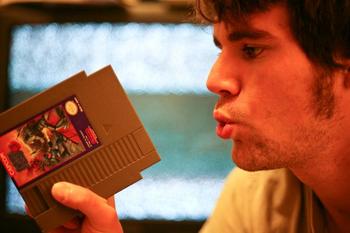
Many children of the 80’s remember this as a common habit from the NES and SNES days. They don’t seem to realize that this method of clearing dust from a cartridge continued well into the 90’s with the Nitendo 64. Up until discs completely took over the console gaming market in the early 2000’s, we would still need to blow dust free from the N64 games as well as the system itself. As great a system as the N64 was, it was never very reliable. It could take a long time to get to turn on sometimes, needing to re-blow into the game and system and re-adjust the game within the console. I still have my N64 and play it from time to time, but unfortunately the longevity of the system is not great. I wish they would release digital copies of my favorite games on the Nintendo E-Shop. Some have been released but not as many as I would like. Give me games like Perfect Dark, Goldneye, and Banjo Kazooi. At the very least I’ve been able to download Majora’s Mask so I can play that with no issues whenever I please.


1. TVs That Don’t Have Game Inputs


When was the last time you tried to hook up a game console to a TV only to find that the TV didn’t have the proper inputs? Probably years, possibly even decades. TVs today come equipped with every possible input you could imagine - HDMI, VGA, AV, and others. You can plug half a dozen things into a single television with no problem, and buy a remote that can operate all of them at once. Though this is a great convenience of today’s world, it wasn’t always this way.


The next time you can take a look at an old tube television, check the back and see what kind of inputs there are. Some TVs were not made with gaming in mind, and in fact some are so primitive they only have a cable jack in the back. What do you do in this case? You’d have to buy a VCR, run the cable into the VCR, run another cable into the television, and then through the VCR you could hook up the game console. This was a hassle and a half and defined most of the vacations I took as a kid. For some reason, hotel rooms and timeshares had little sympathy for the young gamer back in the day. Now, whether a child is going on vacation or visiting their grandparents they need not worry about their console being compatible with the TV, most everything has been streamlined nowadays. And with iPhones and handheld gaming systems, it’s becoming less necessary to transport home consoles with you. There was a day when people would bring their Nintendo 64s and Gamecubes to their friends houses, but now that’s a rare thing. Even with online gaming you no longer need to be in the same room with someone to play with them, but a physical connection is still an important part of gaming. If it weren’t, people wouldn’t go to the lengths of having LAN parties and consoles would attempt to specialize in only single player games. We’ve gotten through the dark ages of gaming and TV incompatability, but we’re heading towards a brighter horizon yet. We’ve only seen a fraction of the excellent games we’re bound to see during our lifetimes, and that is something to look forward to.


Saturday, April 27, 2013

Better Graphics Doesn't Equal A Better Game (But Aesthetic Appeal Can Still Be Appreciated)

There are few elements of a video game that are more obvious or tangible than the graphics. In order to experience gameplay, combat mechanics, story, or character development you have to play the game. But to judge a game's graphics you need only look. I'm a firm believer that better graphics don't make better games - To say games like Minecraft or Super Mario Bros. are inferior because of their pixelated physique is absurd. That being said, there's nothing wrong with admiring a game with great aesthetic appeal.

There are plenty of games that lack interesting story or depth but blow the audience away with good graphics. In fact, games like Call of Duty seem to excel at this. For some a game like Crysis could fall under this category, but I think Crysis is a well put together name. The sci-fi nature of the story pulls you in and the sandbox feel of it works really well. Even though it was released in 2007 I have yet to venture through a more realistic looking jungle.


The Legend of Zelda series is one that is not afraid to experiment with graphical changes. Over the years we've seen top down perspective, 3D games, cell-shading, and a more colorful look with Skyward Sword in 2011. The graphical tone of the game sets the mood for the entire journey. I vividly remember the night sky and bright stars at sea in Wind Waker as well as the dark and lonely twilight realm in Twilight Princess. These are great games that feature beautifully styled graphics to complement the experience.


Bioshock and Bioshock Infinite are games that both took advantage of graphical styles to help achieve the mood of the game. In Bioshock, we spend much of our time in an expansive city beneath the ocean. The style of art nouveau is used to create a dark, dingy, and campy experience. Everything from the lighting to the way the water flows adds to the survival horror aspect of this game. The sequel, Bioshock Infinite, went with a less dark art style that beautifully captures the steam punk-esque nature of Columbia. The game renders towering skyscrapers in a way that makes you really feel their monstrosity. Whether it's dodging a hail of gunfire or flying around on the skyrails, this game renders every moment perfectly.


Batman: Arkham Asylum and Arkham City are arguably the best Batman games ever made. These games take the caped crusader and give you a chance to not just play as him, but become him. The combat mechanics are perfect, and the story draws you into The Joker's insanity. The graphics of this game negotiate between realistic and comic book. There are elements that are exaggerated to give it that comic book feel: The huge moon in the sky, the impossibly ripped inmates, and the classic style of the architecture. Yet the way Batman walks, fights, and even flies makes you feel like he could exist. These two games were beautifully designed and offers plenty of visual arousal as you pummel the villains of Gotham.


The beauty of graphics is not just limited to contemporary games either. Though the Nintendo-64 era couldn't graphically compete with today's games, that system still pushed out some wonderfully designed games. Games like 007: Goldeneye, Perfect Dark, Donkey Kong, Battle Tanks, and both The Legend of Zelda: Ocarina of Time and Majora's Mask. Even earlier PC games like Doom did their best with the graphical limitations of the day. Each of these games was designed with a specific art style to help drive the point of the game. The experience of playing a game like Perfect Dark would be completely changed if the graphic style was changed. 


Graphics in games are a lot like special effects in a movie: they should be used for a purpose. Shortly after the original Star Wars movie came out, George Lucas in an interview said, " Special effects are just a tool, a means of telling a story. A special effect without a story is a pretty boring thing." This, of course, was before he was taken to the dark side and started adding rocks in front of R2D2. 


Should graphics be considered when judging if a game is good or not? Not necessarily, but rather the question that should be asked is does the graphical style of the game add or detract from the experience? Great games are often made better by the art style with which they were designed, if that style cooperates with the overall meaning of the game. I love all games - 2D and 3D alike. If a game is good, I’ll enjoy it. If it’s great, I’ll love it. Sometimes, however, a game can bring great gameplay and story with amazing aesthetics. Don’t judge a game by it’s look alone, but when the art style works well with the composition of the game it deserves to be recognized.

Saturday, April 13, 2013

Harry Potter: Death, Loss, And Hope (Spoilers)


I know Harry Potter might feel like a redundant topic for a lot of people. It’s not like there’s been any lack of it for the last decade – The release of the 7th and final book, the opening of Harry Potter World in Universal Studios, and not to mention the ending of the film saga with The Deathly Hallows Part 1 and 2. In addition to this there is enough fan fiction, blog entries, and cosplaying on the Internet to fill many terabytes. So please, if you have any, put your prejudices and familiarity with this topic aside as I try my hand at diving into this magical world. Specifically, I’m going to go into the themes of death, loss, and hope, and how these fundamental topics drive the story from the first book through the last.


It’s no wonder that J.K. Rowling’s tale of the boy wizard became the best selling book of all time next to The Holy Bible. For one, Harry is a very relatable character. He’s not cocky like Malfoy, or extremely awkward like Ron, or a know-it-all like Hermione, or a prankster like Fred and George, or a flirt like Lee Jordan. Harry works as a great everyman and also as a great character to introduce us to the wizarding world. Having lived in our world for the first 11 years of his life, he’s only familiar with things that we know about – Muggle money, telephones, schools, and the misery of not being loved as a child.

Upon his entry into the world and throughout the books we get to learn everything through his eyes. It is through his ignorance that J.K. Rowling is able to let us know about things like the Gringtotts vaults, vampires, ghosts, moving paintings, the various subjects at Hogwarts, the Ministry of Magic, the various shops in Diagon Alley, and the most feared wizard who ever lived – Lord Vol – I mean, He-Who-Must-Not-Be-Named. Well, Dumbledore did say that fear of the name only increases fear of the thing itself, so I’ll say it: Voldemort.

So I mentioned I wanted to go into the themes of death, loss, and hope in this series. Let’s start with death. Death is prominent in our everyday lives as well as in this book. Throughout the series we witness or hear about the loss of Lily and James Potter, Lupin, Tonks, Sirius, Amelia Bones, Rufus Scrimgeour, Snape, Hedwig, Mad Eye Moody, Fred Weasley, Quirrel, Wormtail, Bellatrix Lestrange, Colin Creevey, Dobby, Bathilda Bagshot, Nagini, Voldemort, Dumbledore, Grindelwald, and many many others. Some of these we are happy to see go, others are heartbreaking. Like the passage of Hedwig as she protected Harry, representing the loss of his innocence. Or the brutal death of Dobby, who was stabbed in the chest. If you have shed tears for any of these characters, you are not alone. Sometimes the death of a fictional character can be just as real and mortifying as the death of a flesh and blood person. For stories can be printed on paper and put onto film, but more than anything they take place inside our own minds. And as Dumbledore himself says, just because it’s in our minds does not mean it isn’t real.

Dumbledore never feared death. He says many times throughout the books that there are worse things than death, a concept that Tom Riddle was never able to wrap his mind around. It is this understanding that made The Order of the Phoenix stronger than the Death Eaters – The willingness and even desire to die for the safety of the wizarding world. At no point did Sirius Black or Remus Lupin or Fred Weaslely back away when death was imminent, and they paid the ultimate price. But I don’t think any of these people regret their decisions. They knew the risks, and they were more than happy to help fight Voldemort. One could argue that it was Harry they were fighting for, and this may be partially true. But it is Neville Longbottom who points out when everybody thinks that Harry is dead that this fight was never about Harry. Voldemort is going to continue to kill and torture, and they need to stop that just not for Harry but for the good of everybody.


Harry feels, as we all feel when faced with loss, great sadness. When Sirius Black is murdered he tries everything he can to find a way to contact him or bring him back. He looks into the enchanted mirror, talks to Nearly Headless Nick to see if Sirius could become a ghost,  and upon his death even tries to go after him behind the veil, which to the best of our understanding is a gateway between our world and the afterlife. The Harry Potter wiki states that the archway has been there for as long as the Ministry has.


Death brings on sadness and despair, having to deal with the grief of losing somebody you love that you were accustomed to speaking to or seeing everyday. But as Dumbeldore says, “Don’t pity the dead, Harry, pity the living. And above all pity those who live without love.” Death is something that many films or books glaze over, even with the loss of major characters. J.K. Rowling does a wonderful job of working death into her story and helping us all make sense of something that nobody truly understands. My favorite idea of this is the story of The Deathly Hallows, where the third brother meets death as an old friend at the end of his life. I think that’s how we should all view it. The Grim Reaper gets a bad reputation for taking you from this life into the afterlife, but he is a guide to help you, to accompany you. Would you really want to make that journey by yourself?


Now, let’s move onto loss. Similar to death, loss brings on feelings of sadness and despair. It can, however, bring on catharsis and closure. It is only after Harry loses his chance with Cho Chang that he is able to fully notice and pursue Ginny Weasley, his future wife and mother of his children. It is only after Cedric Diggory is killed by Wormtail that the Order of the Phoenix is able to form once again and begin working against Voldemort. It is only after Malfoy loses his wand to Harry that Harry is able to become the true master of the Elder Wand. Loss is not always a bad thing, but it can be difficult to accept at first.

Loss is something we’ve all experienced. Whether it’s our favorite video game being lost to the couch cushions, a box of our favorite books getting ruined in a flood, or our favorite car getting totaled in an accident. Loss is not just the loss of life, but the loss of things or ideals. So long as we always push forward and refuse to give up, as Harry never does, we’ll eventually find ourselves in a better future one way or another.

Now onto the final theme I’d like to touch on – Hope. Hope is one of the most powerful, and one of the most dangerous emotions in the known universe, in all worlds. It is what was left within Pandora’s Box, it is what can keep you hanging onto a crush for years when there’s nothing there. Yet it is something we must never lose, because without it pessimism and animosity will fill the void.

In Harry Potter, Harry hangs onto hope throughout the entire series. He hopes that he’ll see Sirius again, he hopes that he’ll be able to catch the snitch in time, he hopes that sneaking around the castle after hours won’t get him caught. It’s his feeling of hope, and his level of daring, that gets him into the number of situations he finds. But without these experiences he would never have stood a chance against any of the Death Eaters, never mind a Dementor, the memory of Tom Riddle, a werewolf, or give him the knowledge to retrieve a bezoar when Ron was poisoned. It is hope that keeps him fighting in even the darkest of days, even when he’s hiding out in the woods for months at a time just waiting for an opportunity to strike.


It is these three themes – Death, loss, and hope that bring us through the highs and lows of the Harry Potter story. We stay with him every step of the way, through every tragedy and every victory. Harry may get downtrodden and lose optimism at times, but I don’t believe he ever truly loses hope. If he did, he would have given up and left the country in the final book. Or he would have faced Voldemort right away and been killed to get it over with so he could join his parents and Sirius. He understands the fight is bigger than just the two of them, and he stays alive and fights for the death and loss that he has witnessed, but also to prevent further tragedy. Harry Potter is one of the most wonderful worlds to fall into. I’ve read the books countless times and I listen to the audiobooks every night as I fall asleep and many times while I’m driving. This fictional world is one of the best to visit. This is on the trifecta of things that have most influenced my life – Harry Potter, The Legend of Zelda, and Star Wars. Without these three separate and unique worlds, I would not be who I am today and I know there are many others who feel the same way.